
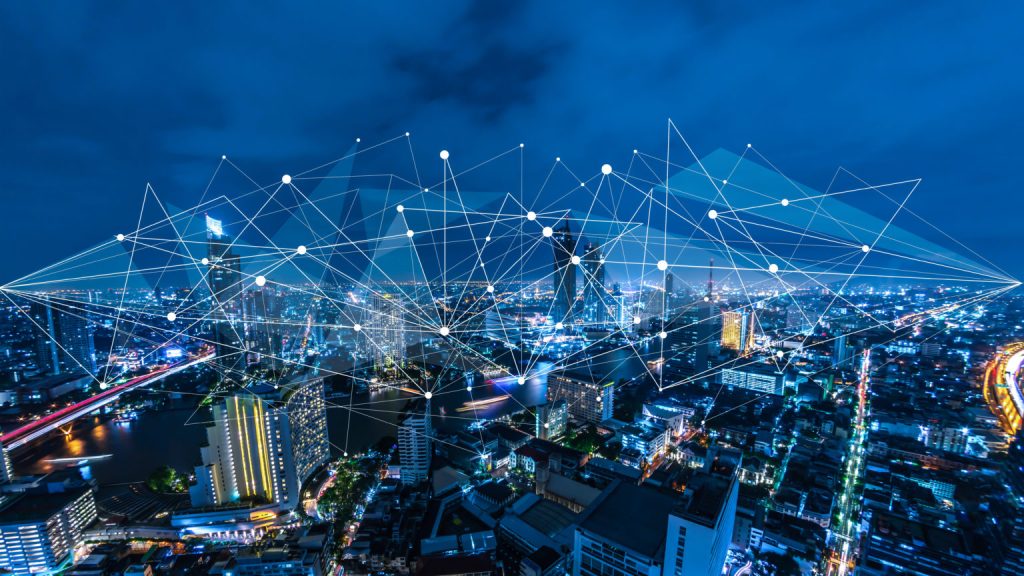
We live in a world that has become interconnected to a degree no one who pioneered the digital revolution ever imagined. Way back when dinosaurs roamed the earth and learned to use punch cards, networked computing systems existed only in government and academic institutions. Over the past several decades the proliferation of networked devices in the form of PC’s and smartphones has connected virtually every individual on the planet. However, until recently the digital revolution has been primarily about connecting people. At some point in the late 2000’s researchers estimate the number of things connected to the internet eclipsed human users.
Consistent with Moore’s law, the semiconductor fabrication industry has achieved miniaturization on an impressive scale. Coupled with a reduction in cost (current situation excepted, I just paid $135 for a Raspberry Pi 4) this has made it possible to introduce microprocessors into devices we never considered worth the effort. It has also been possible to reduce the size and cost of network interface cards to connect devices with 802.11 wireless networks, personal area networks (PAN) and cellular radio access networks (RAN). Miniaturized compute + ubiquitous connection = ‘smart’ devices.
It’s difficult to fully appreciate the implications this may have for humanity. When not just ourselves, but the objects in our environment are IP-routable they can come together to interact in ways no one ever imagined. It is now possible to control the state of any smart device, manually or via algorithm. It’s possible to sense data, in real time, of nearly any aspect of our physical or digital world. But with great promise comes great questions. How secure will this new, interconnected reality be? What expectation of privacy can citizens have when some can always be watching? How will intelligently linking these sensors together drive the next stage in the digital revolution?
Stay tuned to take a peek into the future!
 Viking Industries